
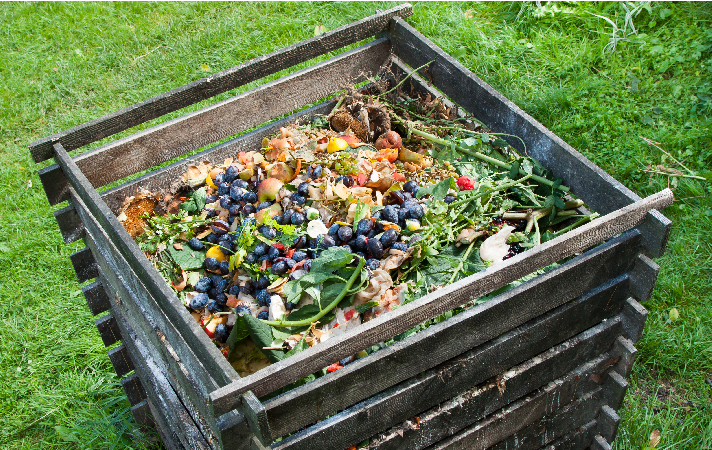
Composting at home is a great way to keep nutrients out of our waterways and help improve water quality!
Composting reduces waste, enriches soil, and protects the environment. By composting grass clippings, leaves, and kitchen scraps, you divert organic material from landfills, reducing methane emissions and creating a nutrient-rich soil amendment that improves plant health and water retention.
Composting also helps prevent harmful runoff, keeping local waterways cleaner. Find out, below, how to start your own compost at home or visit the City of Defiance’s compost site to responsibly dispose of leaves, grass clippings, and other organic waste while helping to create a greener future!

Techniques vary from the very basic compost piles, to homemade bins, to commercial plastics bins. Successful and odor free composting involves weekly turning and watering along with a correct mix of ‘browns’ (leaves, straw) and ‘greens’ (fruit/vegetable scraps, grass clippings). The brown to green ration should be about 25:1.
< Get started —or improve your compost skills—with our Home Composting Guide.
Resources:
- Ohio EPA’s Citizens Guide to Composting
- Land to Lake’s Home Composting Guide
- Call 419.782.1794 for info on Defiance SWCD Composting Workshops
FYI
- Did you know that one teaspoon of compost enriched soil contains one billion bacteria and several yards of fungal filaments? For those of you wondering if this is a good thing- YES, great for helping your plants grow!
- Did you know that grass clippings stockpiled near waterways can cause algal blooms and fish kills?
- Did you know that the average household sends 650 lbs. of compostable material to the land fill every year?
- Why not take your grass clippings, leaves, yard waste, and kitchen scraps and turn them into valuable soil? Composting is easy! If it is a plant or was once part of a plant, it can be composted.