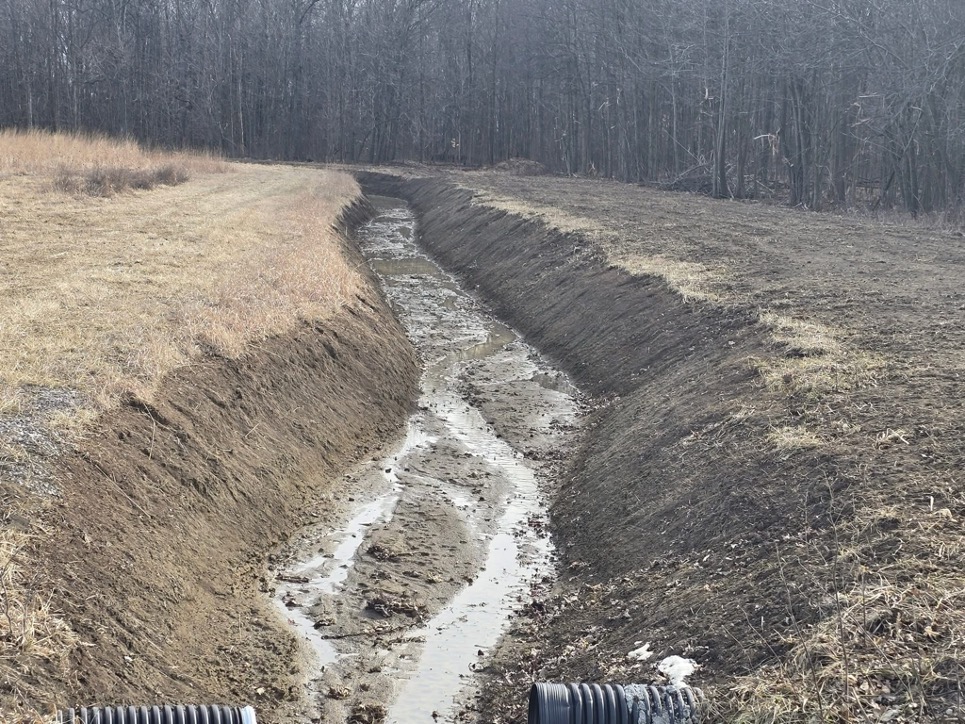

In 2024, two conservation ditch projects were implemented on local Singer Farms’ property with funding from DRA.
The main objectives of these projects were to enhance water quality and create better wildlife habitat while forming a self-developing stream channel that will naturally evolve over time. These overwide ditch projects are designed to slow down water flow, minimize erosion, and boost nutrient retention, ultimately reducing sediment and pollutants entering nearby waterways. While each of these projects has the goal of mimicking a natural stream and creating a linear wetland system, each approach differs to suit the location. These projects are both part of a larger initiative to reduce agricultural runoff and improve water quality through engaging local farmers and implementing best management practices.
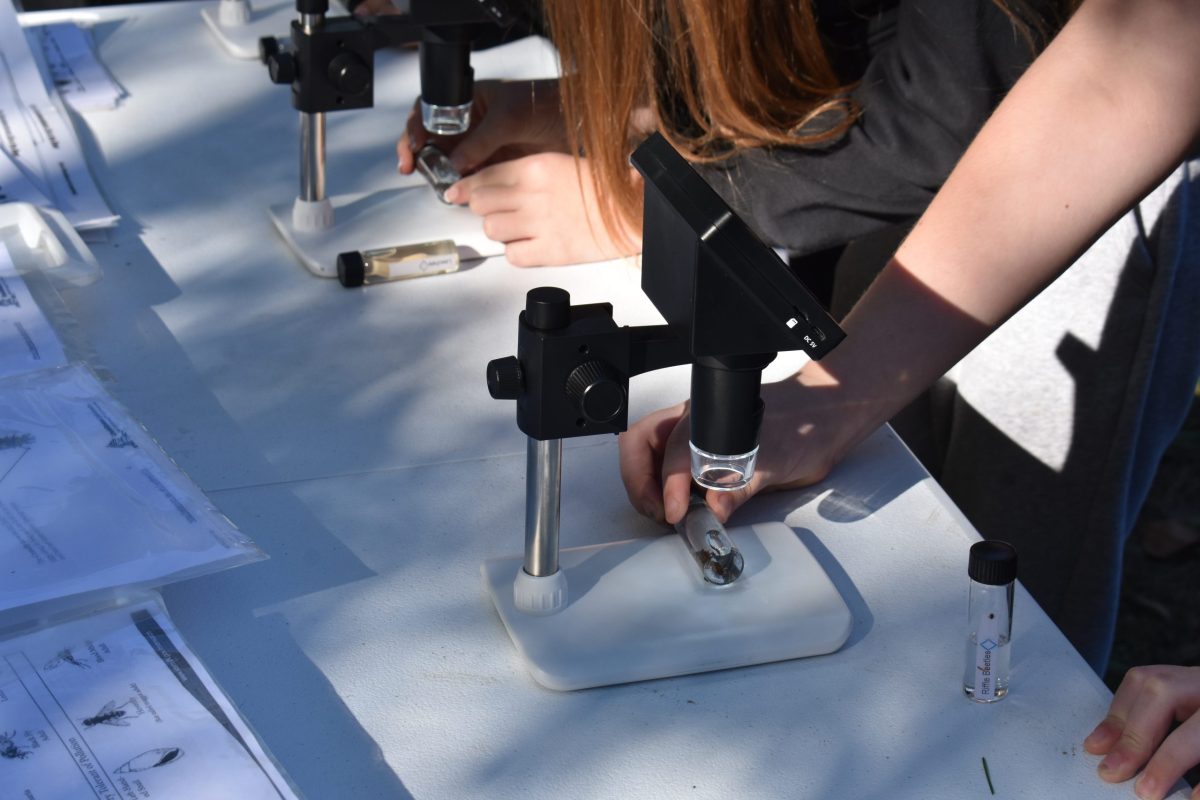
These projects are part of a larger initiative to reduce agricultural runoff and improve local water quality. Our research assistants will monitor the site continuously to track long-term effects on water quality, starting in 2025.
Self-Forming Ditch Details
Self-forming ditches are strategically designed to create stream-like channels with wide bottoms and sloping banks, enhancing water quality and wildlife habitat through natural reshaping. This innovative approach promotes long-term ecological benefits by allowing water to carve meanders and pools over time, effectively mimicking natural systems. The features of these ditches enhance water retention, nutrient filtration, and habitat creation, making them a vital component of the ecosystem. Additionally, native grasses and wildflowers are planted within these areas to stabilize soil, filter runoff, and support pollinator species. As the ditch evolves with minimal maintenance, it continues to enhance resilience, water quality, and biodiversity. This sustainable practice ultimately fosters a healthier environment for both wildlife and local communities.
THE BEND ROAD DITCH: Construction Details
The construction process reshaped the north bank to a 5:1 slope leaving the south bank and original bottom intact. This design encourages natural stream development, encourages water to pool, and facilitates vegetation maintenance.
Project Footprint
- Drains .62 square miles, or 397 acres.
- Has a total length of 2640 linear feet.


LOCKWOOD ROAD DITCH: Construction Details
Construction widened this ditch bottom and constructed sloped sides. This was done to promote natural meandering and habitat formation, with native vegetation planted along banks for pollutant filtration.
Project Footprint
- Drains .48 square miles, or 307 acres.
- Has a total length of 1700 linear feet.